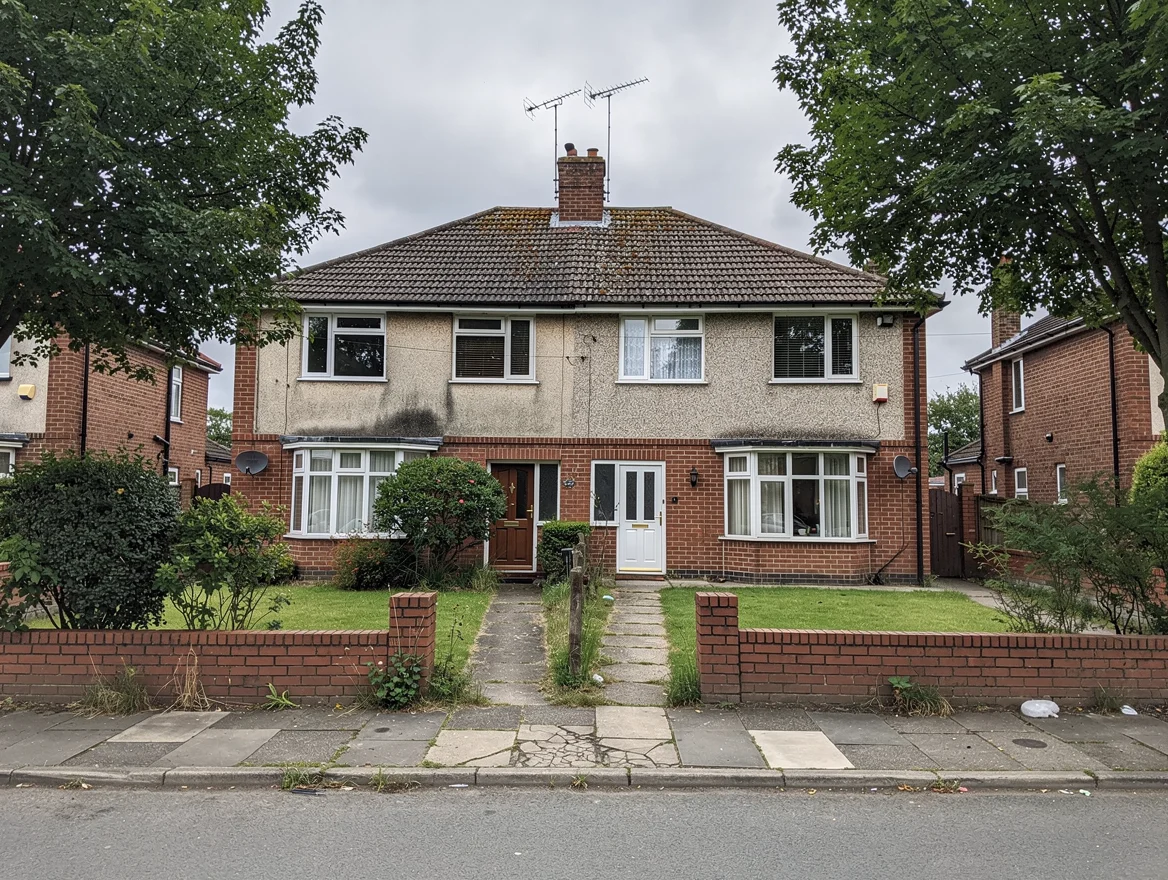
Auction is one of the most reliable methods of sale available. And for some types of property the final sale price achieved can be significantly higher than selling with an estate agent. But auction isn't for everyone, as this article explains.
If you're considering selling your house or flat at auction, you will probably want to know what risks are involved and how auction compares with other methods of sale. We've divided what follows into two parts: Part A sets out the ten genuine disadvantages of selling by auction, and Part B is a fact checker for the ten auction myths we hear most often, several of which come straight from estate agents competing for the same instruction.
We've tried to be even handed throughout. Where a disadvantage is real, we say so. Where it's overstated, we explain what the picture actually looks like.
Part A: The disadvantages of selling at auction
No method of sale is perfect. The ten points below are the drawbacks that come up most often when we talk to home sellers, and they're worth understanding before you commit to selling by auction. Some of the disadvantages may rule auction out for you, but most are manageable once you know they're coming.
Disadvantage 1
Reduced audience of buyers
Not every buyer is willing to buy through auction. The process can be quick, and for some people it feels intimidating. Plenty of buyers scrolling through the listings on Rightmove will skip past an auction lot without a second thought, often because they don't know how buying at auction works and have no interest in finding out.
So the pool of buyers is smaller, and that's most noticeable with on-the-day auctions, where the audience leans heavily towards the trade: builders, developers, landlords and investors.
An estate agency sale starts with the broadest possible audience, and that breadth genuinely matters. It includes the buyer who needs flexibility, who can withdraw if the sale of their own home falls through, and occasionally the buyer who will pay over the odds to secure a home they've fallen for. There's a lot of emotion in an estate agency sale. Estate agents are salespeople, and a skilled salesperson makes an excellent estate agent: building rapport with both sides, telling a prospective buyer there's been a lot of interest, leaving them feeling lucky to have secured such an in-demand property.
Part of the agent's job is to find the buyer who will offer the highest price and who is proceedable, meaning they're unlikely to back out. Those aren't always the same person. The legal framework for buying and selling property in the UK is brittle: either side can walk away at any point before exchange of contracts, for any reason at all, even just a change of mind. With four or five months typically passing between an offer being accepted and contracts being exchanged, that's a long window for circumstances to change, and keeping the sale on track is a large part of what a good estate agent does.
It also cuts the other way. A buyer can make a high offer specifically to get the property taken off the market, knowing they are not actually committed, then take four or five months to do their research and sell their own home. Holding that offer together, reassuring the buyer they've made the right decision, is again down to the agent.
A bird in the hand
A bird in the hand is worth two in the bush, and in property it's worth a good deal more than two. One buyer who is legally committed is worth more than any number who are still free to walk away. So the question isn't how large the audience is when marketing starts, it's how many buyers are left, and how serious they are, at the point the sale becomes binding.
A private treaty sale through an estate agent begins with the widest possible audience, including all the buyers who wouldn't consider an auction. Then, the moment an offer is accepted, that audience becomes one. The "Sold - Subject to Contract" board goes up and the marketing stops. Fifty prospective buyers can become one buyer overnight. It's a funnel: wide at the top, narrowing to a single point.
An auction starts with a smaller audience, perhaps twenty interested parties rather than fifty. But the funnel doesn't narrow. Some drop out as they decide the property isn't for them, others arrive late in the run-up to auction day, and nobody is turned away. It behaves less like a funnel and more like a channel: roughly parallel-sided, carrying the same number of buyers all the way through to the day itself.
Estate agency sale: a narrowing funnel
A wide audience at the start, narrowing to a single buyer the day an offer is accepted.
Auction sale: a channel, not a funnel
Stays wideA smaller audience at the start, but it doesn't taper. They're all still there on auction day.
The audience of buyers for an estate agency sale starts wide and narrows to one. At auction it starts smaller and stays roughly the same size until the hammer falls.
Every sale ends with one buyer. The difference is when the others leave the room. With an estate agent they leave four or five months before the sale becomes binding. At auction they stay until the second it becomes binding.
Auction is becoming a more mainstream way to buy and sell, and the growing range of auction services, in particular extended auction with its longer bidding period, makes the process far more accommodating to end-user and owner-occupier buyers than a traditional on-the-day sale.
Disadvantage 2
No guarantee of selling
As with any method of sale, there's no guarantee your property will sell. Auction is not a cure-all, and it's important to say so plainly: if bidding doesn't reach the reserve price on auction day, your property will remain unsold.
The success rate most auctioneers aim for is around 80% of lots selling. They know they won't hit 100% every time. Some properties are entered at too high a price, sometimes a tenant blocks viewings, and sometimes the legal pack simply isn't ready in time.
Auctioneers don't want unsold lots either. An unsold lot looks bad for them, they don't earn their commission, and it wastes everyone's time. So what do auctioneers do to maximise the likelihood of a sale? There are three areas they focus on.
1. Price
The reserve price needs to be realistic. Set it too high and the property won't attract interest. Set it too low and the auctioneer won't win the instruction in the first place. Auctioneers have to balance the two. They want your instruction, but a good auctioneer won't just tell you what you want to hear, and will happily turn work away if a seller can't agree to a low enough reserve. More on this in our guide to auction reserve prices.
2. Marketing
A good auctioneer markets intensively, advertising on the big portals such as Rightmove and Zoopla. An important part of the marketing mix is advertising the property at a very attractive figure: the guide price. The guide price is usually set below the reserve price. It's used purely for marketing, and the property won't normally sell for the guide price, since bidding has to meet or exceed the reserve for a sale to happen.
Think of the guide price like a holiday advertised "from £299". The headline figure is there to get people interested, and the actual price is decided later.
Low guide price → more interest → more bidders → competition → higher final price.
3. The legal pack
The auction legal pack is the bundle of legal documents every bidder downloads and inspects before they bid. Getting it ready early makes a real difference, because bidders need time to check through it before the auction. A pack that arrives late leaves them little time to do that, and a pack with gaps in it makes cautious bidders drop out or bid low. Late or incomplete legal packs are one of the most common reasons a lot fails to sell.
So why sell by auction if there's no guarantee?
Although it isn't certain, it's a good deal more reliable than a private treaty (estate agency) sale. When you compare the two, an auction gives you three things an estate agency sale can't:
- Your property can't go under offer, and then have the buyer back out five months later.
- Your property can't sell for less than the reserve price, without your consent.
- Your property will be sold to the highest bidder.
There's also a difference in when you find out. With auction you fail early: after just four weeks, and you can quickly try again with the legal pack already prepared. With an estate agency sale you tend to fail late: months in, after surveys and searches, with abortive legal costs and a property that now looks stale on the portals.
You can improve the odds considerably by playing your part. Our guide to the 10 mistakes to avoid when selling a house by auction covers what sellers most often get wrong, and what happens if a property doesn't sell at auction explains the process from there.
Disadvantage 3
Sale price expectations and uncertainty
Your property might achieve a final sale price much higher than the reserve price. It might not. That uncertainty is a genuine disadvantage, and it's also the thing that makes auction such a powerful way to sell, since there's no upper limit on what the bidding can reach.
With a private treaty sale, an estate agent values the property by looking at comparable sales in the area, what's sold recently and what similar properties are currently on the market. It's quite likely the agent will suggest an asking price on the high side. There's nothing inherently wrong with that. It's well known that agents do it, and in a buoyant market it can be exactly the right call, since you never know: an offer might come in at the punchy asking price. In a buoyant market it's better to be punchy on price than cautious. Suggesting a high asking price is also how agents win instructions, which is nothing new and most sellers are alert to it. In a quieter or slower market it can backfire, as buyers are put off making an offer at all if they think the seller's expectations are unrealistic.
It's fair to say that with an estate agency sale the expectations on price are clear. If you're not happy to sell for less than the asking price and no offers arrive at that level, you can carry on waiting, or serve notice on the agent. At least you've tested the market and had confirmation that your price expectations weren't met.
Auction works differently. There's a lower limit, the reserve price, but no upper limit. An unfortunate outcome would be selling at the reserve price when you were expecting more. Equally, properties with hidden potential, or potential that isn't immediately obvious from the particulars, regularly go well beyond what anyone predicted, and the competitive bidding is what gets them there.
Our advice is to keep your expectations a little more fluid than you would with an estate agent. See what price will my house sell for at auction for how the numbers tend to work out in practice.
Disadvantage 4
You need to be a chain-free seller
The good news about auction is that the buyer cannot back out of their purchase. The same applies to you. Once the hammer goes down, contracts are exchanged and the sale is legally binding on both sides.
Standard auction procedure is for completion to take place 28 days after auction day, though a longer completion is possible if required by the seller. Either way, you need to be in a position to hand over the keys within roughly four to eight weeks. That makes auction unlikely to suit a seller with an onward chain, where you're relying on finding and buying your next home before you can move. If you're selling a vacant property, auction's ideal. A tenanted property is fine too, as the tenancy transfers to the new owner.
That said, there are ways to make an auction sale work for a seller in a chain, with your solicitor's help. If you have an onward purchase, they can exchange on the property you're buying conditional on your auction sale completing, and an extended auction gives you a longer and more predictable runway to line the two up. But it needs planning before you enter the auction, not afterwards. Our initial two checks page covers this in more detail.
Disadvantage 5
Costs you may not get back if it doesn't sell
There's no commission to pay if your property doesn't sell. But some auction costs are paid before auction day, and those are the ones you stand to lose.
- Entry or catalogue fee. Some auctioneers charge a few hundred pounds upfront to enter a lot into the catalogue. Many will let you postpone payment until after the auction, payable only on a successful sale, and some don't charge one at all.
- Legal pack preparation. Expect £200 to £500 for a straightforward property, more for anything complicated. Your solicitor does this work whether or not your property sells.
Two things soften this. First, the legal pack doesn't go to waste: it's reusable for the next auction, or for a subsequent private treaty sale, so it's rarely money thrown away. Second, plenty of auctioneers now offer "no sale no fee" terms, and some offer a sell for free service where there's no upfront cost at all and the fee is paid by the buyer instead. On an extended auction the buyer typically pays a fee of 3.75% to 5% plus VAT, which means the seller receives the bid amount without deductions, apart from their own solicitor's fees.
It's worth putting these figures into perspective. A few hundred pounds risked to test the market within about four weeks compares reasonably well with the abortive survey and legal costs of an estate agency sale that collapses five months in. Our page on auction fees for selling property sets out the full cost picture, and there's a side-by-side cost comparison on what happens if a house doesn't sell at auction.
Disadvantage 6
Short preparation time
Auction moves quickly, and that speed is usually the reason people choose it. The flip side is that there's very little slack in the timetable. From instructing an auctioneer to auction day is typically around four weeks, with a hard catalogue deadline part way through, and everything has to be ready by then.
The pinch point is almost always the legal pack. Marketing can start while it's still being compiled, but it needs to be complete in good time before auction day, ideally a week or so beforehand, as bidders rely on it for their due diligence. Situations that commonly need longer than four weeks include:
- Probate sales where the grant of probate hasn't yet been issued.
- Leasehold flats, where the freeholder or managing agent has to supply a management pack, which can take several weeks and is outside your solicitor's control.
- Tenanted properties, where tenancy agreements, deposit protection details and rent schedules all have to be gathered.
- Title problems, such as unregistered land, missing documents, or defects that need an indemnity policy.
If the paperwork isn't ready, the realistic options are to be withdrawn from the catalogue and moved to the next auction, or to go to market with a thin legal pack that potentially puts cautious bidders off. Neither is a disaster, but both are avoidable by starting the legal work the day you decide to sell rather than the day you're entered into a catalogue. See our guide to the auction legal pack for what's involved.
Disadvantage 7
Auction isn't right for every property
Auction suits some properties far better than others, and for a conventional, well-kept home it may achieve a lower sale price than an estate agency sale would. A modern, mortgageable house in good order, in a settled residential street, has a natural buyer who is an owner-occupier in a chain. That buyer is exactly the person least likely to be sitting in an auction room, and they're often the one prepared to pay the most.
Where a property has a problem, a peculiarity or unrealised potential, the picture reverses. Those are the properties auction buyers are actively looking for, and where competitive bidding tends to beat a private treaty sale.
| Usually better suited to auction | Often better with an estate agent |
|---|---|
| Unmodernised or in poor condition | Modern and in good decorative order |
| Structural problems, damp or subsidence history | Straightforward and readily mortgageable |
| Short lease, or a title defect | Clean title, long lease or freehold |
| Tenanted, including regulated tenancies | A family moving home, with an onward purchase in a chain |
| Development potential, land, garages, unusual lots | Standard house type with lots of comparables |
| Probate sales and properties that must sell by a date | No deadline, and time to wait for the right buyer |
A good auctioneer will tell you honestly which of these two groups your property falls into. If your property is better suited to an estate agent sale and there's no time pressure, you should expect to be told so. Our page on selling a high value house by auction looks at the same question from the top end of the market.
Disadvantage 8
Auction is a very public process
Auction is deliberately transparent, and transparency has a cost in privacy. Your property is advertised on the portals with a guide price, it appears in a published catalogue, the bidding is conducted in the open, and the result, including what it sold for, is generally published afterwards. Neighbours will know, and so will anyone who cares to look.
Viewings are public too. Auctioneers usually run open house or block viewings, where several groups of people are shown round in the same time slot, typically across two or three appointments before auction day. That's efficient and it creates a sense of competition, but it does mean a stream of people through your home in a short space of time.
Some sellers assume they can sell at auction without viewings at all. In practice that isn't realistic. Bidders are being asked to exchange contracts unconditionally on the fall of the hammer, and very few will commit to that without seeing the property first. A lot with no viewings attracts fewer bidders and lower bids.
The upside is that the same openness is what drives the price. Buyers gain confidence from each other through the process of competitive bidding: every bidder can see what they're competing against, and each rival bid is reassurance that others see value in the property too. You, in turn, can see exactly how the price was arrived at. If you need a genuinely discreet sale, auction is not the right method.
Disadvantage 9
No backing out
At an unconditional auction, contracts are exchanged when the hammer falls. The buyer pays a deposit, usually 10%, and from that moment neither side can walk away without serious consequences. That's the single feature that makes auction reliable, and it's also the one that catches sellers out.
In practice it means:
- You can't change your mind after the hammer falls, whatever happens in your circumstances.
- You can't accept a better offer that arrives the following week.
- You're committed to completing on the contractual date, usually 28 days later.
- Withdrawing a lot before auction day, once it's been marketed, normally means paying a withdrawal fee.
None of this is a trap, and it's all disclosed in the auction agreement before you sign. But it does mean auction rewards sellers who have made their decision, and punishes those who are still weighing things up. If you aren't sure you want to sell, don't enter a lot to test the water.
Disadvantage 10
Not all auctions are the same
The word "auction" now covers two quite different products, and confusing them is one of the easiest ways for a seller to end up disappointed.
Unconditional auction is the traditional method, whether run as an on-the-day sale or as an extended auction over a longer bidding period. Contracts are exchanged at the fall of the hammer, the buyer pays a deposit, and completion follows 28 days later. This is the method we recommend.
Conditional auction, usually marketed as the modern method of auction, works differently. The winning bidder doesn't exchange contracts. Instead they pay a non-refundable reservation fee, often 3% to 5% of the price or a fixed minimum, commonly £6,000 or more, which buys them an exclusivity period: typically 28 days to exchange contracts and a further 28 days to complete, which is why conditional terms are so often quoted as a 56-day timetable. If the buyer doesn't proceed, they lose the fee and you're back to square one, having lost up to two months. The reservation fee may go to the auctioneer rather than to you, depending on the terms.
So a conditional sale isn't a binding sale. If certainty is the reason you're considering auction, that distinction matters a great deal. We've set it out in full on unconditional versus conditional auction and what is the modern method of auction, and the five uns of true auction is a quick way to check what you're actually being offered.
Part B: Property auction fact checker
Some property information websites state very bizarre untruths about auction, typically overstating costs and making the process seem more complicated than it actually is. A fair few of the myths below also arrive by way of "my estate agent said...", which is worth bearing in mind, since the agent saying it is competing for the same instruction.
Here are the ten we hear most often, with an honest verdict on each. Not all of them are completely wrong, and where a claim has some truth in it we've said so.
"My estate agent said..."
-
Myth: "Auction means there's something wrong with the property."
Fact: Any property can be sold at auction. It's simply a more efficient method of sale for difficult properties.
-
Myth: "You have no control over what it sells for."
Fact: You agree the reserve price, and your property cannot sell for less without your consent.
-
Myth: "Auction is riskier than selling through an estate agent."
Fact: Around one in three estate agency sales collapse before completion. An auction sale exchanges contracts on the day.
Myth 1
"Houses at auction always sell for less."
Partly true
It depends entirely on the property. Some types of home genuinely do achieve more through an estate agency sale, particularly modern, mortgageable houses in good condition where the natural buyer is an owner-occupier. For anything with potential, in need of modernisation, or with a complication that puts off a mortgage lender, auction routinely achieves more than a private treaty sale, and often considerably more.
The myth is fed by a misunderstanding of auction pricing. Guide prices and reserve prices are deliberately set below market value to attract bidders. People see the guide price and assume that's what the property sold for. The reserve is a floor, not a forecast, and the sale price is whatever competitive bidding produces above it.
Myth 2
"It will be a disaster if my house doesn't sell at auction."
Not true
Most properties do successfully sell at auction, though there's no guarantee. Unsold properties are often sold soon after the auction, or can be entered into a later auction. There's no auction commission to pay if your property doesn't sell, but you will have lost the cost of preparing the auction legal pack and the catalogue entry fee. The legal pack itself isn't wasted, since it's reusable next time.
If the lot doesn't sell, three routes stay open
Interested bidders often come back with offers in the days after the auction, the next auction is usually only a few weeks away, and a private treaty sale remains available as a fallback.
An unsold lot is rarely the end of the road, and the legal pack you paid for is reused whichever route you take.
Myth 3
"Only distressed or problem properties go to auction."
Not true
Any property can be sold at auction. The myth probably exists because properties in a bad state of repair achieve higher sale prices at auction compared to an estate agency sale, so auction has become recognised as the way to sell properties in poor condition. That's a reputation for being good at something difficult, not evidence that there's something wrong with every lot in the catalogue.
Repossessions, probate sales, tenanted investments, development sites and perfectly ordinary family homes all appear in the same catalogues. Auction is worth considering whenever certainty and speed matter, whatever condition your property is in.
Myth 4
"You have no control over the sale price."
Not true
You have more control over the minimum sale price than you do with an estate agent. You agree the reserve price with your auctioneer before the property is entered, it's confidential, and your property cannot be sold for a penny less without your consent. An asking price offers no such protection, since it's only a suggestion and the estate agent is obliged to pass on every offer that comes in below it.
You also keep control during the marketing period. Pre-auction offers are passed to you, and you can accept one and sell before auction day if it's strong enough. What you can't control is the ceiling, and that's the point: it's a major feature of selling by auction.
Estate agency sale: an asking price is a suggestion
Offers typically come in below the asking price, and the direction of negotiation is almost always downwards.
Auction sale: the reserve price is your safety net
The sale price starts at your reserve, and the direction of negotiation is upwards.
A big difference between an estate agency sale and an auction sale is the direction of negotiation. With an estate agent the price is typically negotiated downwards from the asking price. At auction, competing bids move the price upwards from your reserve.
Myth 5
"Auction buyers are only bargain hunters."
Partly true
Plenty of auction buyers are investors and developers looking for a margin, and they'll certainly try to buy well. That's true of every buyer for every method of sale. The difference at auction is that they're bidding against each other in public, and a room full of people all trying to buy below market value is precisely what pushes the price up to market value and beyond.
The audience is also broadening. Extended auctions in particular, with a longer bidding window and time to arrange a mortgage, attract far more owner-occupiers than a traditional on-the-day sale.
Myth 6
"Selling at auction is much riskier than using an estate agent."
The opposite is true
Industry estimates have long put the figure at around one in three estate agency sales collapsing before completion, and the government's own 2026 analysis, published with its home buying reform roadmap, agrees. It takes around 170 days on average, from listing to completion, to sell a property, and the risk sits with you for the whole of that time. When a sale does collapse you've usually paid for legal work with nothing to show for it.
At an unconditional auction, contracts exchange on the fall of the hammer. There's no gap for a buyer to renegotiate or disappear. The risk at auction is that the lot doesn't sell, which costs a few hundred pounds and about four weeks, and you find out early rather than late.
When does the sale become binding?
Both timelines drawn to the same scale. The padlock marks the moment neither side can walk away.
With an estate agency sale the sale only becomes binding at exchange, months in, and the risk sits with you until then. At auction the binding moment arrives after three or four weeks of marketing, with completion 28 days later.
Myth 7
"My solicitor must attend on auction day."
Not true
We've seen some websites making false statements about the seller having to pay their solicitor to be present in the auction room on auction day. This is not true. There is no requirement for the seller's solicitor, or the seller, to be present on auction day. All legal paperwork is prepared in advance of the auction and the contract of sale is ready for the buyer to sign.
Myth 8
"I have to carry out the viewings myself."
Not true
Some estate agency websites suggest it's the vendor's responsibility to organise viewings. This is not true. Auction companies typically conduct viewings on an open house or block viewing basis. A representative from the auction company will attend the property, open up, show people around and take contact details to follow up. The seller doesn't need to be present, but we know some sellers like to be there to meet prospective buyers, which is of course fine.
Myth 9
"Reducing my asking price with the estate agent will have the same effect."
Not true
Cutting the asking price does generate fresh interest, and it's a sensible thing to try. But it doesn't change the mechanics. With an estate agency sale you still accept one offer from one buyer who remains free to renegotiate or withdraw four or five months later. And a property that has been reduced once often invites an offer below the new figure as well. You've moved the price without buying any certainty.
The same applies to sealed bids and best and final offers, which agents sometimes use to mimic competitive bidding. Bidders can't see what anyone else has offered, so there's no escalation, only guesswork. And whatever figure wins is still subject to contract, subject to survey, subject to the buyer changing their mind - and open to being negotiated down later. Auction converts interest into an exchanged contract on a fixed date. A price reduction converts interest into more of the same uncertainty.
Myth 10
"Only cash buyers can bid at auction."
Not true
Mortgage buyers bid at auction regularly. What they can't do is start arranging the finance after they've won. With completion 28 days after the hammer falls, a bidder needs their mortgage agreed and their lender's valuation done in advance, which is why serious bidders download the legal pack and get their funding lined up before the day. Specialist auction finance and bridging lenders exist for exactly this purpose.
The practical point for sellers is that the property still needs to be mortgageable for those buyers to take part. Where it isn't, for example a short lease or a property with no kitchen or bathroom, the audience does narrow to cash buyers. An extended auction, with its longer bidding period, gives mortgage buyers more time and widens the field again.
Further reading
- Pros and cons of selling a house at auction
- Selling at auction versus using an estate agent
- Unconditional versus conditional auction
- What is an auction reserve price?
- Mistakes to avoid when selling by auction
- What happens if a property doesn't sell at auction?
- How much does it cost to sell a house at auction?
- Selling a house at auction - frequently asked questions
Next steps...
Contact us to find out if your property is suitable for auction. Request a free pre-auction appraisal or feel free to call us on 0800 862 0206 - we'll be happy to help.