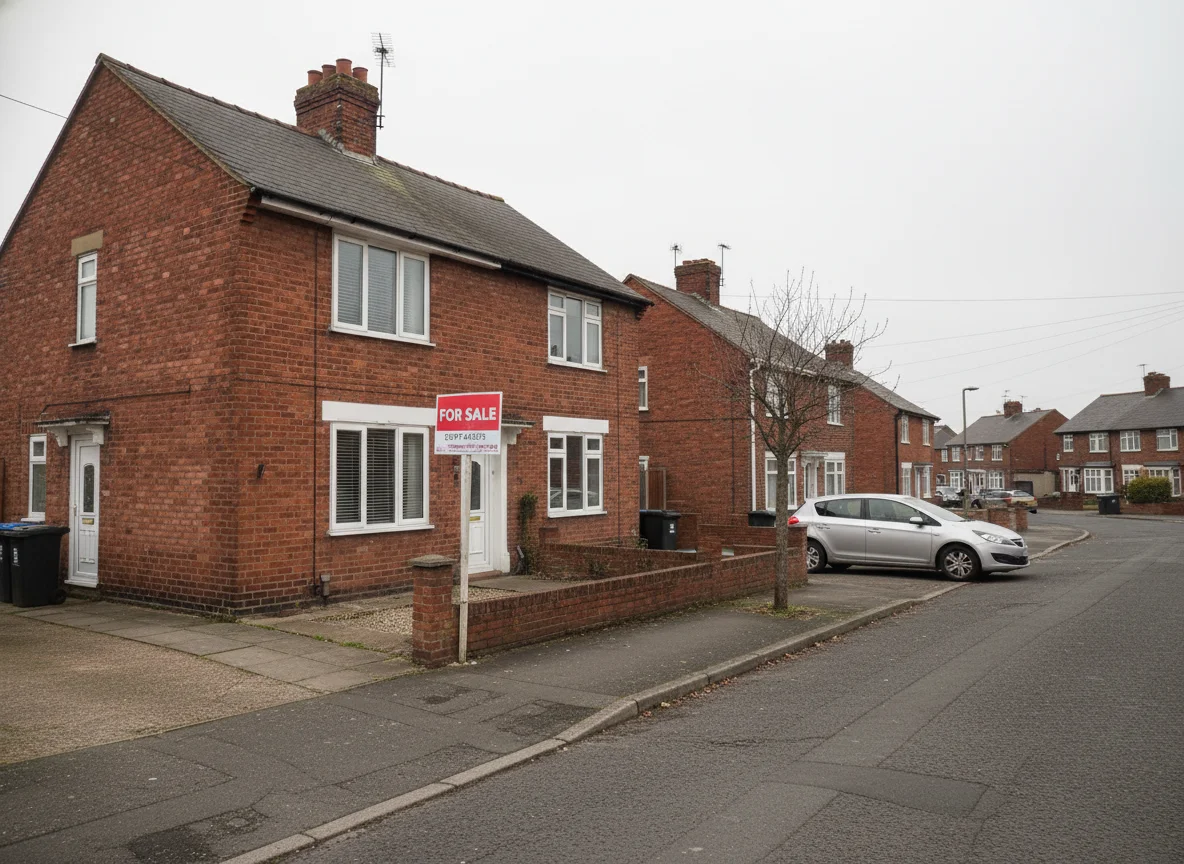
In almost every case you have to choose one route or the other. Auction companies require exclusivity, so the estate agency listing needs to be removed from the portals (Rightmove and Zoopla) before the auction marketing goes live. Trying to run both at once carries two risks: the marketing clash can weaken the result you get on auction day, and you could end up liable for two commission fees on one sale.
Most sellers who ask us this question have already attempted to sell through an estate agent. A sale has fallen through, the property has sat on the market for months, or the whole process has simply worn the seller down. Auction becomes plan B. It's a more reliable way to sell, but it isn't the right answer for every property or every seller, and it's worth reading the pros and cons of selling a house at auction before you commit to anything.
The instinct to keep both routes (estate agent and auction) open is completely understandable. You're hedging your bets. What if the estate agent finds a buyer next week? Why close a door on an enthusiastic buyer? It's a sensible way to think about most decisions, but it doesn't work here. It's also worth remembering that enthusiasm and being able to proceed are two different things. The buyer who has fallen in love with your property is often the least experienced one in the running, with no mortgage offer in place and their own sale not yet started. This page explains why running both routes at once doesn't work, what it can cost you and what to sort out before you sign anything with an auctioneer.
Can you use an estate agent and an auctioneer at the same time?
No, not in practice. Auctioneers want exclusivity to sell your property, in the same way an estate agent asks for sole agency. Almost every auction company's terms of business will require the property to be withdrawn from estate agency marketing before it goes into the auction catalogue, and they will ask you to confirm that no other agent is instructed.
One property, one auction, one set of bidders.
The same applies to entering the property with two auctioneers, or with two different auction formats at the same time. You can't run an on-the-day auction and an extended auction side by side, or list with two auction houses hoping one of them gets a result.
Why joint agency works for estate agents but not for auction
Multi-agency and joint agency arrangements are common in estate agency, and they can work perfectly well. Two agents market the property, whichever one introduces the buyer that goes through to completion earns the fee, and the seller pays a slightly higher rate for the privilege. So it's a fair question: why can't the same arrangement work between an auctioneer and an estate agent?
The answer comes down to how an auction sale is structured. Everything an auctioneer does is aimed at one moment in time - the fall of the hammer. The marketing period is short and intense, the guide price is set deliberately low to attract the maximum number of interested parties, and the result depends on getting several motivated bidders to the same auction on the same day. Anything that leaks interest away from that moment weakens the result.
Every buyer who contacts the estate agent instead of the auctioneer is potentially a bidder who never reaches auction day.
Running an estate agency listing alongside an auction sale causes complications:
- Enquiries get split. A buyer who finds the estate agent's listing deals with the estate agent, doesn't register for the auction, and never bids. The auctioneer never knows they existed.
- Two prices, one property. The estate agent is advertising an asking price. The auctioneer is advertising a much lower guide price to generate interest. Buyers looking at both listings don't see a bargain, they see confusion, and the guide price stops doing its job.
- The estate agent has every reason to talk buyers out of bidding. Not always deliberately, but their fee depends on a private treaty sale, not an auction sale. A casual "you don't want to go to auction, it's risky, let me put an offer to the seller" is enough to remove a bidder.
- Fewer bidders means a lower price. Competitive bidding is what drives an auction result. Take three bidders out of the room and you haven't just risked the sale, you've potentially removed the competition that pushes the price to its highest level.
- It confuses the portals. The same property appearing twice, under two agents, at two different prices, with different "added on" dates, doesn't look like a well-run sale to anyone browsing Rightmove.
Auction marketing on its own
Every buyer bidsEstate agency listing running alongside
Buyers splitThe exception: an auction company with a local partner agent
There is one arrangement where a property is genuinely handled by an auctioneer and an estate agent at the same time, and it's worth knowing about because it looks like an exception to everything above.
Some auction companies work with a local partner estate agent, which is fairly typical with extended auction formats. The local agent may handle viewings and know the area, while the auction company runs the sale, the marketing and the bidding.
The important difference is collaboration rather than competition. The agent and the auctioneer are working together towards the same outcome, under one arrangement, with one set of terms, one fee structure and clearly defined roles. Every enquiry still ends up in the same place, so nothing is pulling buyers away from the auction. That is the opposite of two businesses marketing the same property side by side, each hoping to be the one that earns a commission.
If your estate agent has recommended auction to you, there's a good chance this is the sort of arrangement they have in mind, with the sale passed to an auction partner they already work with. If so, the most important thing to establish is the type of auction being suggested. Conditional auctions, commonly marketed as the modern method of auction, work very differently to unconditional auctions, and the difference decides whether your sale is actually secure once the bidding ends. It's worth understanding the difference between unconditional and conditional auctions before you agree to anything.
Start with your existing estate agency contract
Before you commit to an auction sale, it's worth spending a moment to check the agreement you signed with your estate agent. The points to look for:
- The type of agreement. Sole agency, sole selling rights, joint sole agency or multi-agency. These are not the same thing and the difference matters enormously.
- The minimum term. Commonly 8, 12 or 16 weeks from the date you signed.
- The notice period. Often two to four weeks, and it may run on top of the minimum term rather than inside it.
- When commission becomes payable. Usually on exchange of contracts, but read it rather than assuming.
- What happens after the agreement ends. Most agreements keep the agent's right to a fee alive for a period afterwards if the buyer was someone they introduced.
- Withdrawal and marketing charges. Some agreements allow the agent to bill for photography, floor plans, EPC or portal advertising if you take the property off the market.
- A "ready, willing and able purchaser" clause. Uncommon now, but the most expensive clause you can overlook. More on it below.
If you can't find the paperwork, ask the agent for a copy. They're required to have given you their terms in writing before you became committed to them.
Estate agency agreements: sole agency, sole selling rights, joint sole agency and multi-agency
This is the part most sellers get wrong, and it's the part that costs money. The wording estate agents use is set out in law, in the Estate Agents (Provision of Information) Regulations 1991, so the meanings are fairly consistent from one agent to the next. Find the row that matches your own agreement below.
The last column is the one that matters if you're thinking about auction: it answers whether your estate agent, or a previous estate agent, could still charge you a fee where the buyer is found by an auctioneer.
| Type of estate agency agreement | What it means | Fee still due to the estate agent? |
|---|---|---|
| Sole agency | They are the only agent instructed. You can normally sell to a buyer you find yourself without owing them a fee. | Yes, potentially. The standard wording makes a fee payable where the buyer is introduced by another agent during the sole agency period, and an auctioneer is another agent. |
| Sole selling rights | They are entitled to a fee however the buyer is found, including by you. | Yes. This is the whole point of the clause. It doesn't matter who introduced the buyer. |
| Joint sole agency | Two agents are instructed together and share one fee between them, whichever of them finds the buyer. | Yes, potentially, and notice usually has to be served on both agents rather than one. |
| Multi-agency | More than one agent is instructed and the one who introduces the buyer earns the fee. | Usually no, but the rate is higher and this is where dual-fee disputes most often start. |
| After the agency agreement ends | Most agreements keep a claim alive for buyers introduced while the agent was instructed. | Yes, if the eventual buyer was introduced by the agent and their interest carried through to the purchase. |
The trap is sole agency. Sellers reasonably read "sole agency" as the softer option, the one that leaves them free to go elsewhere. It doesn't. The prescribed wording says you will be liable to pay the agent:
if at any time unconditional contracts for the sale of the property are exchanged with a purchaser introduced by us during the period of our sole agency or with whom we had negotiations about the property during that period; or with a purchaser introduced by another agent during that period.
An auctioneer is another agent. So if you enter the property into an auction while a sole agency agreement is still running, and it sells, your estate agent can have a legitimate claim to their fee as well as the auctioneer having a claim to theirs. That isn't the agent being difficult, it's what you signed.
Sole selling rights goes further again. Under that wording the agent is entitled to their fee if contracts are exchanged during the period "even if the purchaser was not found by us but by another agent or by any other person, including yourself", and afterwards too if the buyer was introduced or in negotiations during the period.
The "ready, willing and able purchaser" clause
This clause is far less common than it used to be, but if it's in your agreement you need to know about it before you make any decisions. It means the fee becomes payable simply because the agent produced a buyer who was in a position to exchange, whether or not you sell to them:
A purchaser is a 'ready, willing and able' purchaser if he is prepared and is able to exchange unconditional contracts for the purchase of your property. You will be liable to pay remuneration to us, in addition to any other costs or charges agreed, if such a purchaser is introduced by us in accordance with your instructions and this must be paid even if you subsequently withdraw and unconditional contracts for sale are not exchanged, irrespective of your reasons.
Read that last line again in the context of moving to auction. A seller who turns down a proceedable buyer found by their agent, in order to sell at auction instead, could trigger a fee under that clause. It's worth checking for specifically.
Could you end up paying two fees?
It shouldn't happen, and usually it doesn't, but it happens often enough that it's worth taking seriously. The government's own guidance is blunt about the risk. GOV.UK warns that if you use more than one estate agent you may need to pay fees to more than one of them when your home sells, depending on the contract you signed and whether the agent has sole selling rights.
The Property Ombudsman, which we're a member of, takes the position that a consumer should not usually have to pay two commission fees on the same sale, and that agents have a specific responsibility not to put a seller in that position. Where it goes wrong, it's normally for one of three reasons: a sole selling rights agreement that was still running, an agency agreement that was never properly ended, or a buyer who first came to the property through the estate agent.
That last one turns on what's called an effective introduction. The agent has to show they did something that actually started the buyer's interest in your property, and the clearest evidence of that is having carried out the viewing. Simply having advertised the property isn't enough. The Ombudsman's view is that a viewing more than six months before the agent was dis-instructed, with no evidence that the interest continued, isn't an effective introduction to a later sale.
When your old agent can still charge you
However, if Buyer A viewed more than six months before you dis-instructed the agent, and nothing was heard from them since, that isn't considered an "effective introduction".
So the six months matters, and so does the paper trail. When you end the agency agreement, ask for two things in writing: confirmation of the date the agreement ends, and a list of everyone the agent introduced to the property. If a bidder turns up at the auction who viewed with your old agent eight months ago and hasn't been heard from since, that list is what protects you.
Confirming your fee position isn't a favour you're asking for. Under The Property Ombudsman's code of practice, an agent must explain to you in writing, when the instruction ends, any continuing liability to pay a fee and the circumstances in which you could end up paying more than one. The list of names is different: providing it is treated as advisable rather than compulsory, which is why it's worth asking for specifically.
If a fee is claimed later and you were never given anything in writing. The burden of proof sits with the agent, not with you. To claim commission on a sale they didn't complete, they have to show with documentary evidence that they were the effective cause of the introduction. The Property Ombudsman is clear that simply having sent out particulars, or having carried out a viewing that no real interest followed, is unlikely to be enough on its own.
An agent who never set out your fee liability in writing, and never gave you a list of the people they introduced, will find that a difficult case to make. Keep the emails either way. If a fee is claimed and you don't accept it, raise it with the agent first and then with their redress scheme, which for most agents is The Property Ombudsman.
Situations we see
These are the dilemmas that come up again and again, and what to do about each one.
If you switch to auction, commit to it
Deciding to sell at auction has to be a firm decision, because half-committing to it produces the worst of both worlds. On auction day an unconditional sale is legally binding on the fall of the hammer. There's no renegotiation and no backing out, by either side, which is the whole reason auction is a more certain way to sell. But that certainty is only worth something if the property makes it to the auction with its marketing effort intact.
Practically, that means serving notice on your estate agent, asking them to remove the listing from their website, Rightmove and Zoopla, and directing every enquiry from that point to the auction company. We've written separately about how to do that and what to expect when you do, because agents rarely take it quietly: see serving notice to your estate agent.
And if an offer does come in through the estate agent during the notice period, weigh it up properly rather than reacting to it. There is nothing legally binding about that offer. You can only sell your property once, so it's worth being clear-headed about which route gives you the better result and the better chance of actually completing. Offers can also be made and accepted before auction day through the auction company, on auction terms, which is often the better way to take a strong early bid. That's covered on selling your home before auction day.

Check the auctioneer's terms of business too
The same care you apply to the estate agency agreement should be applied to the auction company's terms before you sign them. RICS advises sellers to agree the terms of appointment before the auctioneer does anything, and to check the commission and any extra charges you could be liable for. Look for what's payable if:
- the property sells at auction;
- it sells before the auction, to a buyer who came through the auction marketing;
- it sells after the auction, often within a defined period afterwards;
- you withdraw the property, or it fails to sell;
- the eventual buyer is found by you or by somebody else.
Also check the entry or catalogue fee, whether commission is charged to you or to the buyer, any buyer's administration fee, and who pays for the auction legal pack. Our page on costs for selling at auction sets out the normal ranges so you have something to compare against.
The point worth holding on to is that both contracts can carry a tail. Your estate agent may retain a claim over buyers they introduced, and your auctioneer will normally retain a claim over buyers introduced through the auction. Overlap those two periods carelessly and you create the exact situation you were trying to avoid.
Unconditional or conditional auction?
Not every auction works the same way. One type, usually called the modern method of auction, isn't legally binding when the hammer falls, and it's the type most often offered to sellers through an estate agent referral. The difference is whether the sale is legally binding, or whether the buyer can still walk away.
In an unconditional auction, whether it's held in a room or online, contracts are exchanged when the auction ends. The buyer pays their deposit, the sale is legally binding on both sides, and completion normally follows within 28 days. This is auction in the true sense, following the real rules of auction, and it's the whole reason auction exists as a way of selling: when the bidding stops, the property is sold. It's the format we recommend, and the one that makes leaving an estate agent worthwhile.
In a conditional auction, usually marketed as the modern method of auction, the winning bidder doesn't exchange at the end of bidding. They pay a reservation fee and get a period, often 28 or 56 days, in which to exchange. Until they do, they can still walk away, and you're back to the uncertainty you had with the estate agent. It also affects when fees fall due and what happens if the transaction doesn't complete. There's a fuller comparison on unconditional vs conditional auction.
Your options if you're already with an estate agent
There are four realistic routes, and which one suits you depends on how far into the agreement you are and how urgently you need to sell.
- Wait for the agreement to end. The cleanest option if you have the time. Serve notice, let the term and the notice period run out, then instruct the auctioneer. Check what liability continues for buyers already introduced.
- Ask to be released early. Many agents will agree, particularly if the property has been sitting unsold. Some will ask for their marketing costs. Get the release confirmed in writing with a termination date on it.
- Use the agent's auction partner. If they have a genuine arrangement with an auction company it can be the simplest way to move across. Check what type of auction it is first. Not all auctions are the same, and this is where sellers most often get caught out.
- Anything else needs agreeing in writing first. Multi-agency terms, or a joint arrangement between your agent and the auctioneer, are both possible but rare. Neither solves the exclusivity problem, and both risk you paying two commissions on one sale unless who gets paid what is documented before the auction marketing starts.
Questions to ask before you sign anything
Get answers to these, in writing, before you instruct an auction company. It takes an afternoon and it removes almost all of the risk on this page.
Your checklist
- Does my estate agent have sole agency or sole selling rights?
- Am I still inside the minimum contract period, and how much notice do I have to give?
- Will my agent charge a fee if an auctioneer finds the buyer?
- Can my agent claim a fee after the agreement has ended, and for how long?
- Which previous viewers does my agent regard as their introductions? Ask for the list in writing.
- Are there withdrawal charges or marketing costs to settle?
- Does the auctioneer charge if I withdraw, or if I accept an offer before auction day?
- Who pays the auction fees, and what will the buyer be charged?
- Is the auction unconditional or conditional, and when exactly does the sale become binding?
- Has the termination date of the agency agreement been confirmed in writing?
Looking to sell your house or flat? Request a free auction sale estimate or call our team on 0800 862 0206 to talk about the best options for you.
Frequently asked questions
No. Your estate agent cannot stop you selling your property at auction. What they can do is claim a commission fee if their agreement says one is due, so the question is never whether you are allowed to move to auction, it is what the move costs you. Check the agreement for the minimum term, the notice period and any liability for buyers introduced while the agent was instructed.
You should not normally have to pay two commission fees on one sale, and The Property Ombudsman takes the view that agents have a responsibility not to put a seller in that position. It can still happen. The usual causes are a sole selling rights agreement that is still running, an agency agreement that was never formally ended, or a buyer who first viewed the property through the estate agent. Getting the termination date and the fee position confirmed in writing before you sign with an auctioneer is the way to avoid it.
Sometimes. Many agreements have a minimum term of 8 to 16 weeks with a notice period on top, and you are contractually bound until both have run. Agents will often release a seller early if asked, occasionally in return for their marketing costs. There is also a separate right to cancel within 14 days if you signed the agreement in your own home rather than at the agent's office.
This is the most common cause of a double commission claim. If the agent carried out the viewing and that interest carried through to the eventual purchase, they may be entitled to their fee even though the property sold at auction. The Property Ombudsman's view is that a viewing more than six months before the agent was dis-instructed, with no evidence of continuing interest, is not an effective introduction. Ask your agent for a written list of everyone they introduced when you end the agreement.
Almost never. Auction companies require exclusivity, so the estate agency listing has to come down before the auction marketing begins. The exception is where the auction company works with a local partner estate agent under a single agreement, which is common with extended auction formats.
Yes. Offers made before auction day are common and can be accepted, but they should go through the auction company rather than round the side. A pre-auction sale is normally completed on auction terms, with contracts exchanged straight away, so you keep the certainty that made auction attractive in the first place.
The property is not sold and it stays yours. The auctioneer will usually negotiate with the highest bidder and any underbidders straight after the auction, and many unsold lots sell in the days that follow. You can also enter the property into the next auction, normally at a revised reserve.
It depends on the format, not on whether it is online. An unconditional auction is legally binding when the auction ends, whether it takes place in a room or online, because contracts are exchanged at that point. A conditional auction, often called the modern method of auction, is not binding at the end of bidding. The winning bidder pays a reservation fee and has a period in which to exchange, and they can still walk away.
Your solicitor or conveyancer prepares it, usually working to the auctioneer's deadline. It contains the title documents, searches, leasehold information where relevant, the special conditions of sale and the property information forms. Getting it started early is the single biggest thing a seller can do to keep an auction sale on schedule.
A note on advice
Estate agency agreements and auction terms of business vary from one firm to the next, and commission disputes turn on the exact wording and on the facts of the individual sale. This page is general information rather than legal advice. Read both contracts carefully, get any fee arrangement confirmed in writing before you instruct an auctioneer, and take independent legal advice where the terms are unclear or where two businesses could each claim a commission.
The position set out here applies to England, Wales and Northern Ireland. The law is different in Scotland, where property is normally marketed through a solicitor estate agent and a sale becomes binding on conclusion of missives, so the fee and exclusivity issues work differently.
More auction help
- Serving notice to your estate agent - what to expect!
- Pros and cons of selling a house at auction
- Has your house sale fallen through?
- Accepting an offer before auction day
- Selling at auction FAQs
- Guide to selling a property at auction
- Request an auction sale price estimate
Next steps
Contact us to find out if your property is suitable for auction, and to talk through where you stand with your existing agent. Request a free pre-auction appraisal or feel free to call us on 0800 862 0206 - we'll be happy to help.